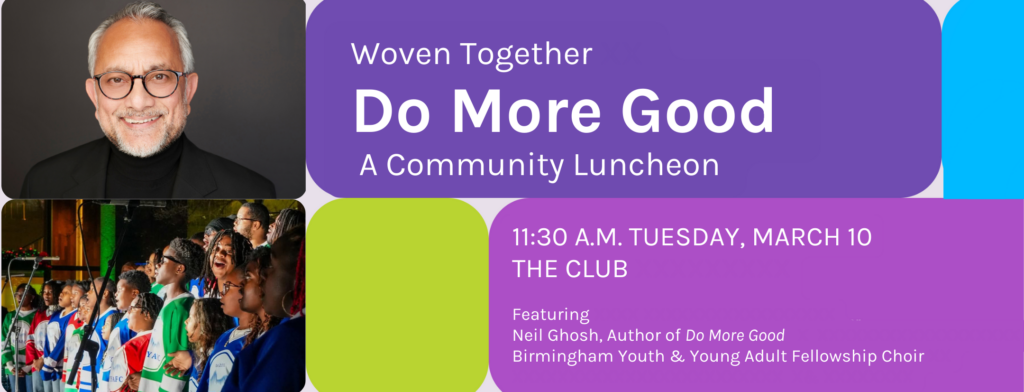
 On Tuesday, March 10, 2026, the Community Foundation of Greater Birmingham will welcome author, social impact strategist, and entrepreneur Neil Ghosh to the Magic City as the keynote speaker for our 2026 Woven Together Community Luncheon. This year’s theme: Do More Good.
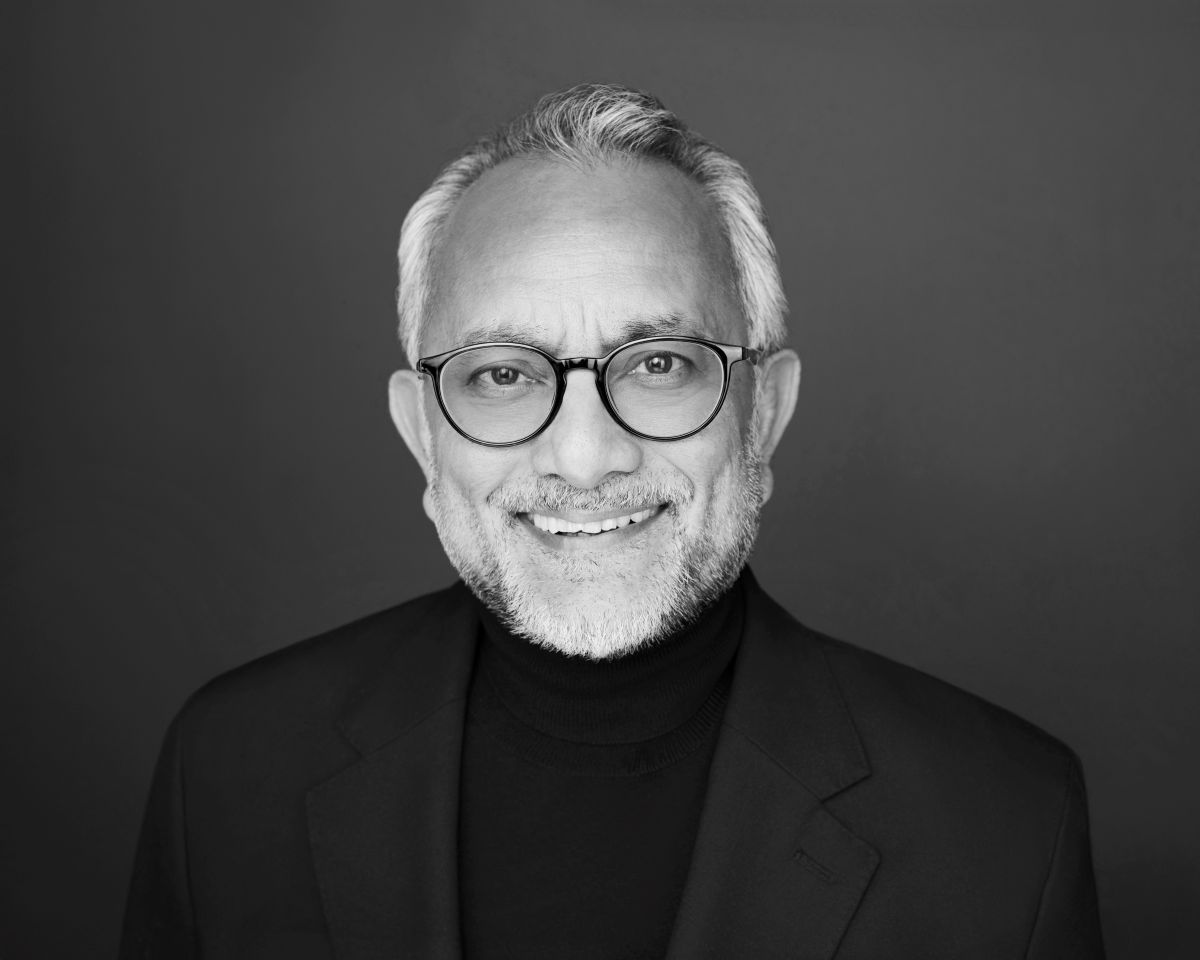
Neil Ghosh has a mission and a message. His mission is to build bridges among people of all backgrounds and beliefs. His message is that everyone, regardless of background or belief, has the power to make a difference.
This is a lesson he learned early in life when he founded a grassroots organization to empower children and youth in his hometown of Kolkata, India, when he was only 14 years old. He’d go on to work in nonprofit, government, philanthropic, and private sectors. He’s led the Australian government’s investment and trade office and held leadership roles in global nonprofits supporting vulnerable populations in more than 50 countries. He was CEO of SOS Children’s Villages USA, executive vice president of the Global Fund for Children, and CEO of SNV Netherlands Development Organisation USA. Currently, he serves as the president of MGR Professional Services, Inc., a columnist at Patheos, and a senior advisor to the Ousri Foundation and the Healthy Climate Initiative.
Ghosh is also the author of the bestselling book “Do More Good: Inspiring Lessons from Extraordinary People.” The book shares stories of people making an impact in their communities. The features include household names like Mother Teresa, politicians such as Jimmy Carter and Hillary Clinton, and celebrities like Kevin Bacon and Angelina Jolie. But the book also includes stories of Ghosh’s parents and of other everyday heroes.
In 2026, as America marks 250 years as a nation, Ghosh plans to visit as many communities as possible to spark conversations and bolster hope. To prepare for Ghosh’s stop in Birmingham, we spoke with him about his work and inspiration.
What inspired you to write your book Do More Good?
I will give a three-prong answer, and they are connected in my mind.
I grew up in what I will not call utter poverty, but I did not grow up in a family with a lot of wealth. I always joke that we had empathy in our home before we had any modern amenities like a gas stove or refrigerator. But at the same time, I observed, at a very young age, the power of small action — in my home and my community. I was very involved in my community at a young age. I was 14 when I started a club called Kolkata Youth Club to bring together kids from different religions and different economic backgrounds. We had sports. We had teaching classes in slums. So, I value community because I saw the power of small action. It’s not two plus two is four. It can be eight. It can be 10. The impacts are sometimes pretty large.
Fast forward and I’ve worked in many sectors, and I’ve traveled extensively and it reinforced what I saw in my childhood — the power of small action.
The third thing — a lot of people who know the nature of my work will ask, What can I do? How can we help?
Because of this question I was asked so many times, I didn’t want to write a book about motivation or inspiration. After each chapter of my book, I have a resource section. Let’s say you care about food security or poverty, or child trafficking — whatever the issue might be, I list organizations that one can look into, one can join, one can support.
Tell us more about the three pillars of your book.
The three pillars of the book are empathy, purpose, and action. I wanted the action part equally strong and not just have empathy and purpose. Without action, what do I do with my empathy? The book is based on core beliefs I’ve always had. Everyone has the power to make a difference. It doesn’t matter what we earn. It doesn’t matter where we come from. Everyone has the power to make a difference. Everyone has something to teach us. And giving, in any form, can reduce loneliness and increase quality of life.
What advice would you give to someone trying to figure out their purpose?
I think one clear connection between all the people in my book is that they all acted with a clear sense of purpose. I always say, purpose doesn’t scream, it whispers. To listen to purpose sometimes we have to quiet down the noise. It’s so loud right now. We are living in a time of information overload. For me, purpose is knowing why you show up. Answer the question — what kind of neighbor, what kind of citizen, what kind of leader do I want to be, not just professionally, but civically?
What can we expect from your talk at Woven Together?
I will talk about the three pillars of empathy, purpose, and action. Empathy is not a red state value or a blue state value; it’s an American value. I will talk about why purpose is important. It is critical because without purpose, we can feel lost. And I will talk a lot about action, because at the end of the day, we can have seminars after seminars, read books after books, but if you don’t act, empathy doesn’t mean anything.
When you act on your empathy, that means you have engaged empathy, and that becomes engaged citizenship. In this 250th anniversary [of America], I think we have an opportunity to build neighborhood after neighborhood and show what unity looks like, what compassion looks like, what strengthening community looks like.