Research has shown that sick or premature infants whose mothers can’t breastfeed have better outcomes when fed donor milk instead of formula. Donor milk reduces medical complications and surgical interventions, decreases hospital stays, and lowers the risk of sepsis and other disorders.
This is why the Mother’s Milk Bank of Alabama (MMBAL) exists.
After operating out of the Community Food Bank of Central Alabama for about 13 years, MMBAL is finally getting a home of its own, thanks in part to a $50,000 grant from the Community Foundation of Greater Birmingham in December 2024. The group will move into its new space at 708 Valley Avenue in Birmingham this month.
As Alabama’s only human milk bank, the MMBAL provides life-saving access to pasteurized donor human milk for critically ill infants whose mother’s situation or medical challenges leave them unable to nurse. Donor milk is dispensed to neonatal intensive care units (NICUs) where it is used to nourish premature and medically fragile infants.
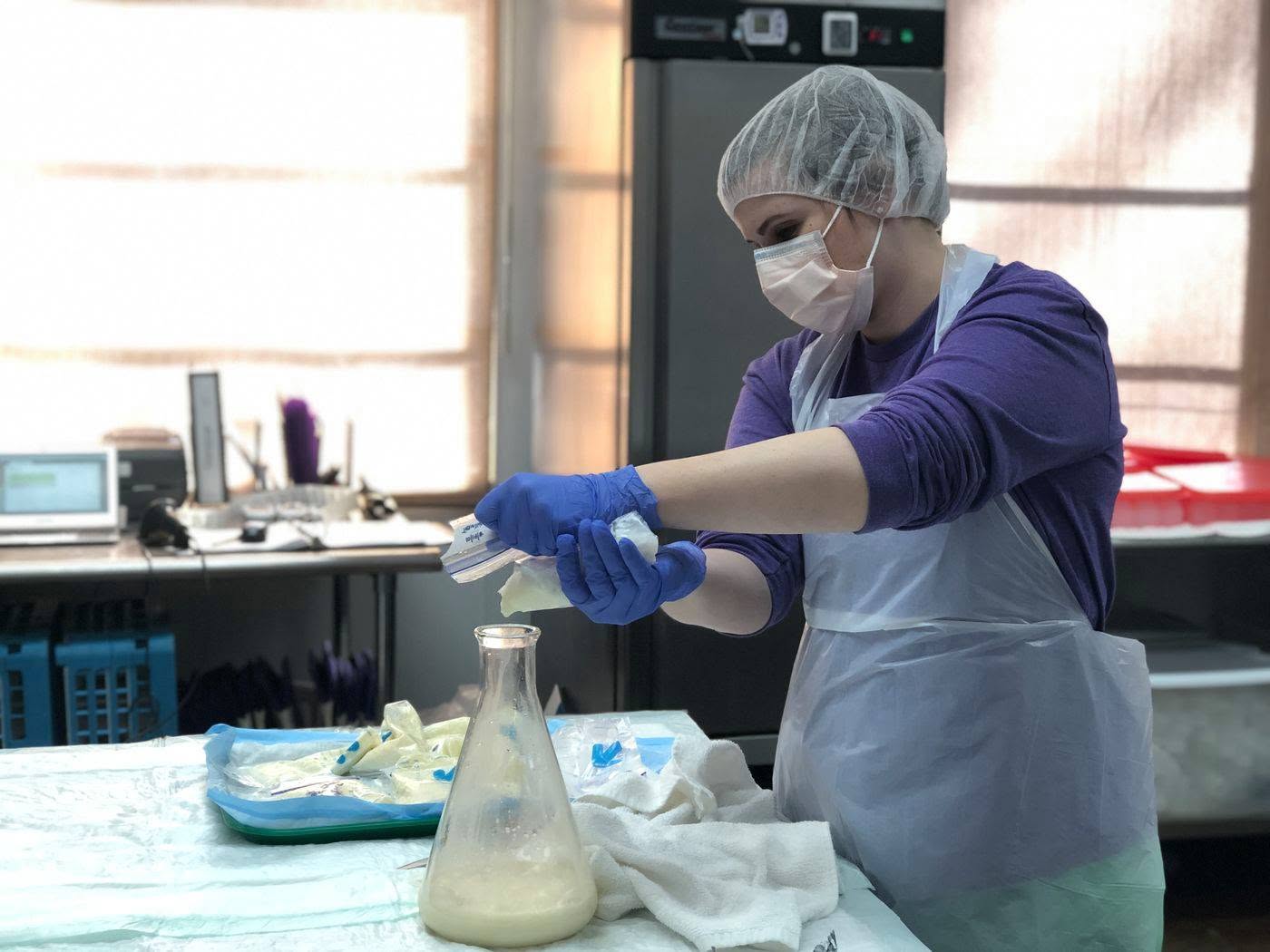
MMBAL was established in 2013 as a program of the Community Food Bank of Central Alabama. MMBAL became an independent non-profit organization in 2016. That year, MMBAL dispensed more than 19,000 fluid ounces of pasteurized donor milk. Last year, the organization dispensed 162,000 ounces.
“Almost all NICUs in our state are using our donor milk,” said MMBAL Executive Director Kristina Habchi.
That increase in demand increased the group’s need for more space.
“We’ve been expanding and growing for quite a while and have been needing our own space for a long time,” Habchi said. “We are currently functioning out of one office and one lab, which was fine when it was just me and one other employee, but there’s 11 of us now.”
In addition to needing space for staff and for the lab MMBAL uses to pasteurize donor milk, Habchi and her team also need space for community education and outreach.
“We know that we only receive donor milk when there is breast milk in excess, and there’s only breast milk in excess when there’s access to resources for breastfeeding mothers,” Habchi said. “There’s a large deficit in our state around breastfeeding education and support, so we strategically wanted to choose an easily accessible location with conference room ability to provide direct lactation support and our own lactation room.”
How the donor milk process works
MMBAL is accredited by the Human Milk Banking Association of North America, an organization run by lactation professionals, prescribers, practitioners, and neonatologists that sets standards and conducts annual audits of nonprofit milk banks.
“We have really strict and rigid protocols that we follow,” Habchi explained. Donors go through a rigorous screening process that includes a blood test.
“There are communicable diseases that can pass through breast milk, and that’s how we make sure that they do not get to the really fragile infants that we serve,” Habchi said.
Once the milk is received, it’s pasteurized.
“Milk very naturally has bacteria in it, and our bacteria is part of what makes human milk awesome, but because of the population that we serve, they’re very immunologically compromised, their gut is underdeveloped, so we can’t risk exposure to anything that they cannot handle,” Habchi said. “So, we pasteurize the milk in a way that maintains the nutritional quality while removing any dangerous bacteria.”
A sample from each pasteurized batch is then sent to a microbiology lab at the University of Alabama at Birmingham (UAB) for additional review.
“It’s pretty much a superpower.”
Conditions such as necrotizing enterocolitis (NEC) demonstrate the importance of donor milk for medically fragile infants. NEC is the leading cause of morbidity and mortality for premature infants.
“Studies have come out showing that exposure to formula can increase the risk five to sixfold,” Habchi explained. Meanwhile, hospitals that have implemented donor milk protocols have seen a huge decrease in NEC.
“It’s pretty much a superpower that women have, that they can create this liquid that’s perfect,” Habchi said. “And we just haven’t found the science so that we are able to create something that will work as well as human milk will for these fragile infants.”
Habchi harkens back to history and says, “Women have been breastfeeding since the beginning of time. Milk sharing has been around since the beginning of time.”
Mothers who donate are helping their community by offering life-saving help to our most fragile community members.
“Moms helping moms,” Habchi said, “has always been something that’s very much impressed me, even before becoming a mom, and then even more so afterward.”
To learn more about the Mother’s Milk Bank of Alabama, visit mmbal.org and follow on Facebook.