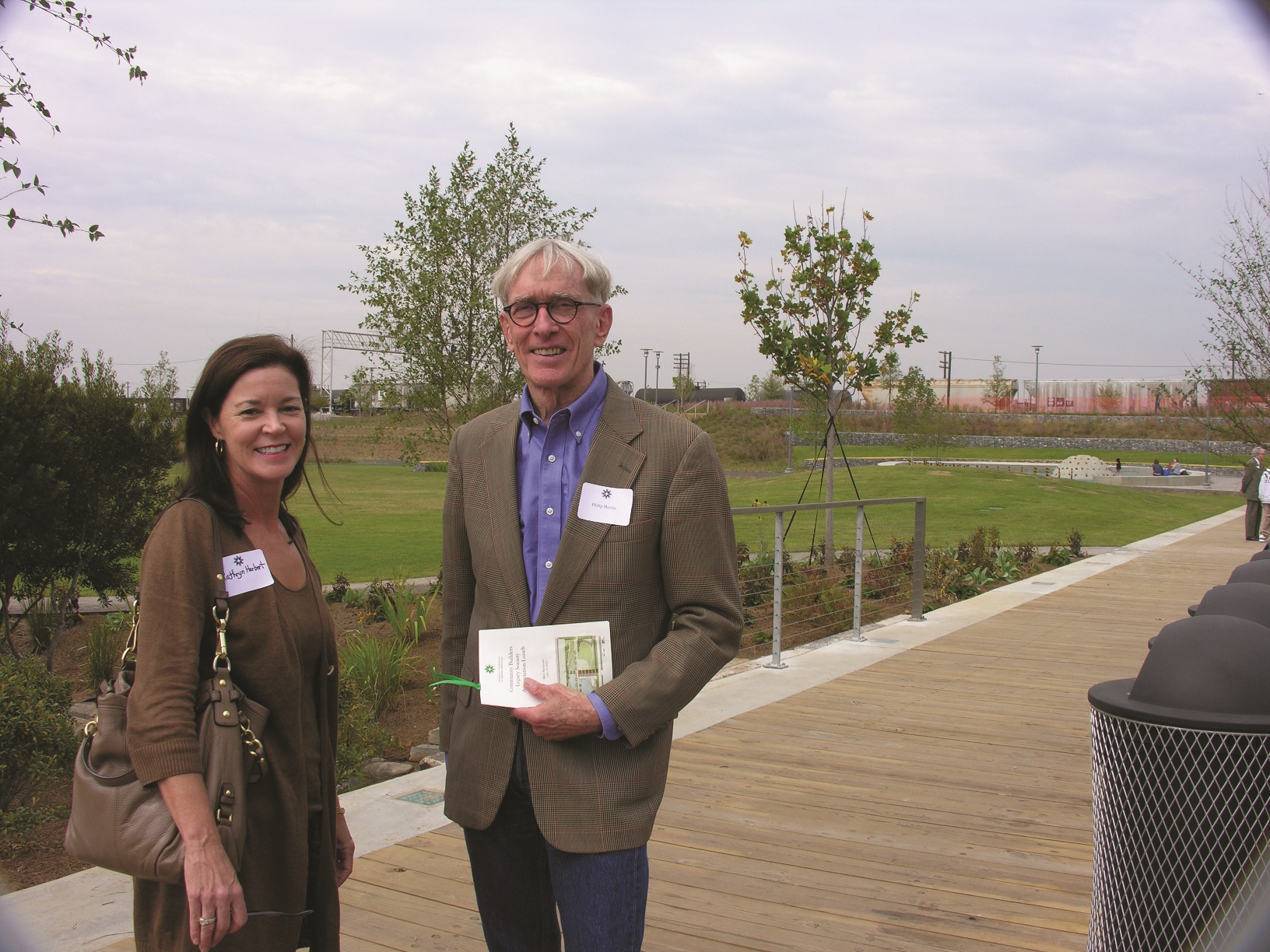
Anyone who has ever enjoyed an afternoon with family and friends at Railroad Park, a place often called Birmingham’s living room, has Philip A. Morris to thank for those memorable moments. Though not a trained designer, Morris was a visionary. He not only served on the planning committee for Railroad Park but also for Linn Park and Red Mountain Park. He was chair of Operation New Birmingham (now REV Birmingham), Birmingham Historical Society, and Mountain Brook Villages Design Review Committee. He was co-chair of the Vulcan Park renovation planning committee and served on the boards of the Vulcan Park Foundation, Birmingham Botanical Society, and Friends of Linn Park. He was also a founding board member of Design Alabama and Horizon 280 Association.
Morris passed away in 2017, but his legacy lives on in part through the Philip A. Morris Fund for the Design Arts. The Morris Fund is an endowed Field of Interest Fund that Morris established at the Community Foundation of Greater Birmingham in 2015. (The Morris Fund is currently accepting applications for its 2026 grant cycle through June 30. Learn more at the Morris Fund.)
“Philip had an amazing capacity to see connections and the need for connections, particularly in community, as related to physical structural design,” said Norman Johnson, a member of the Morris Fund advisory committee. “He saw parks being as important as the sewer system.”
Morris believed the design arts played a vital role in building and enhancing communities, and he established the Morris Fund to support this vision. The Morris Fund’s goal is to increase the impact of quality design and create and expand awareness of the design arts, which includes urban planning, design and the built environment; architecture; graphic arts and graphic design; and landscape planning and design.
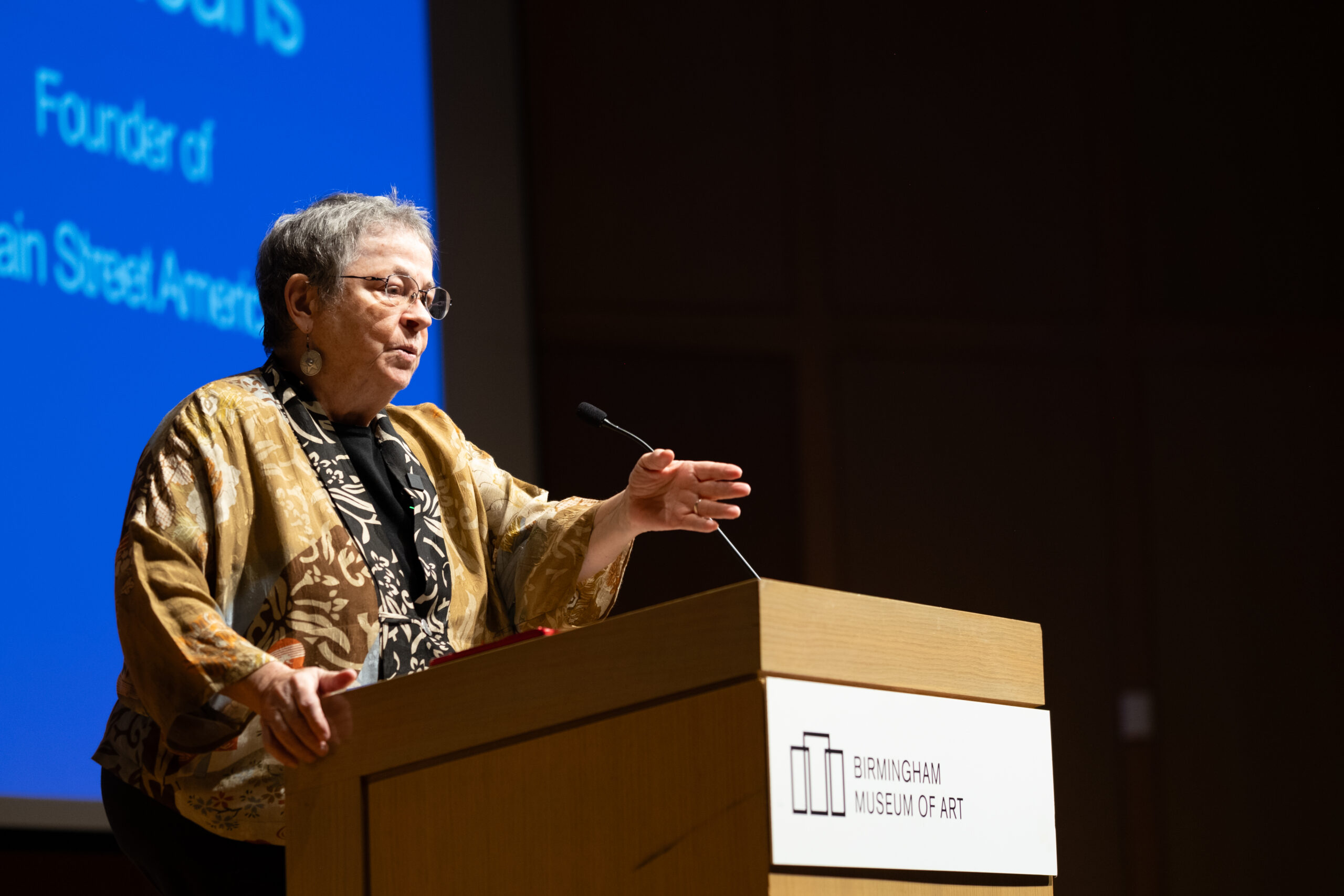
The Advisory Committee reviews grant proposals, conducts site reviews, and presents recommendations for funding to be awarded in August each year. The fund supports design projects that align with Morris’s vision. The fund also sponsors an annual lecture on design arts.
“First and foremost, it has to be something that is going to contribute to the city,” said Katherine Pearson, a Morris Fund committee member, when asked what types of projects get the committee’s attention. She added that they are particularly interested in projects that help broaden access to the city and its amenities.
Since its founding, the Morris Fund has given more than $1 million to area nonprofits. In 2025, the fund awarded $214,000 to seven organizations. Recent grants include support for a documentary on Railroad Park and technical design of an interactive information wall for 16th Street Baptist Church’s new Education and Visitors Center. Past grant recipients include the Birmingham Museum of Art for its The Ways of Seeing exhibit (which focused on architecture), REV Birmingham to support design fees for Linn Park renovations, and Auburn University’s Urban Studio for a lecture by Jeff Speck on creating walkable cities.
Each year, the Morris Fund supports a cohort of local leaders who attend Harvard University’s The Walkable City workshop, a two-day program on the most effective arguments, techniques, and tools for reshaping places to support walking, biking, and public transit.
Passion and Motivation
An Oklahoma native, Morris adopted Birmingham as his home when he moved to the Magic City in 1969 after being recruited to Southern Living magazine. He soon became instrumental in shaping the magazine’s distinctive voice, and under his leadership, Southern Living began covering landscape architecture.
“Even before he came to Southern Living, he was already passionate about making cities more livable, about investing in cities,” said Pearson, who met Morris when they both worked at Southern Living.
Before the move to Birmingham, Morris worked as a reporter for the Oklahoma Journal and later the Daily Oklahoman/Oklahoma City Times, where he covered city infrastructure.
“He brought a great deal of knowledge about city design,” Pearson said.
Eager to pass on that knowledge, Morris organized and led walking tours of the city, Johnson shared. And he was always dreaming of a better Birmingham.
“The other thing to point out about Philip is he had a motivation,” said Johnson, who also met Morris at Southern Living. “He didn’t just have the ideas. He felt compelled to do whatever it was he could do. In some people’s minds, I bet they thought he was a troublemaker because Philip asked questions. His job, as a reporter, was to ask questions and to investigate.”
Johnson applauded the Community Foundation’s management of Morris’ $3 million endowment for the Fund.
“Over the lifetime of the fund, we’ve given away a little over $1 million, and we have more than $3 million in the fund,” Johnson explained. “So we’ve given away a million dollars, and we still have more money than we started with. And that is all just the absolute genius of the Community Foundation. I know Philip is just grinning with the idea that his generosity has been amplified.”
Learn More
To learn more or get involved with the Morris Fund, contact Kendall Chew Jones at kjones@cfbham.org or 205-327-3827.